

How to effectively prevent silicone rubber cables from turning and getting damaged?
During the laying process, if the turning Angle is too large, it may cause mechanical damage to the interior of the cable conductor. Such damage is not visible because it is covered by the cable insulation layer. Even if the circuit resistance is measured, insulation and leakage tests are still difficult to detect defects. During use, if the temperature of the damaged part is too high, it will cause the insulation strength of the cable to decrease until a fault occurs.
The cause of the cable head failure is that during the production process of the cable head, the lengths of the three cable heads are the same. However, when connecting to the equipment, due to terrain restrictions, the intermediate phase cable head is too long, forming an arch, which causes damage and discharge at the root of the cable head. Subsequently, based on the connection conditions of different devices, measures are taken to shorten the connection length of the intermediate phase cable heads, ensuring that the three-phase cable heads are not subjected to external forces. Practice has proved that the operation has achieved good results.
Cables account for a large proportion of the investment in the entire power grid system. Therefore, when choosing cables, users should consider long-term benefits and select products with good performance indicators, long service life and high cost performance. Specifically, air can be added to polyethylene as an insulator to reduce dielectric loss, including the characteristic impedance, attenuation, structural reflection and bandwidth of the cable.
The larger the return loss value is, the more uniform the interior of the cable will be and the smaller the signal reflection will be. Cables with poor return loss indicators have little impact on image clarity and detailed performance. In severe cases, double images may occur, and even some channels may become unusable. Therefore, the wider the bandwidth of the network, the more attention should be paid to this indicator of the cable.
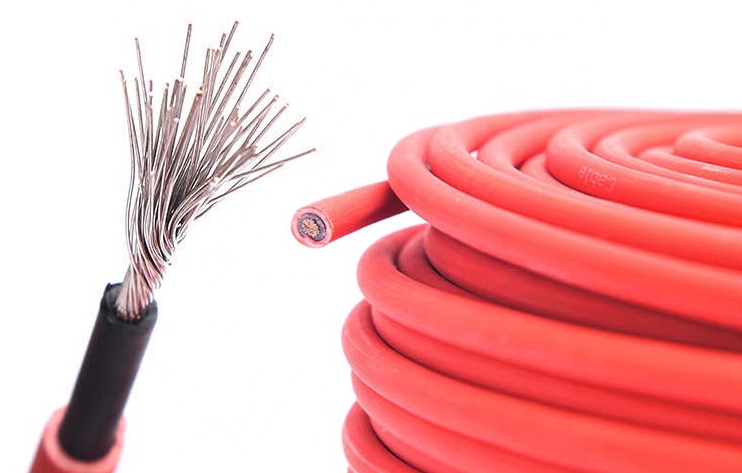
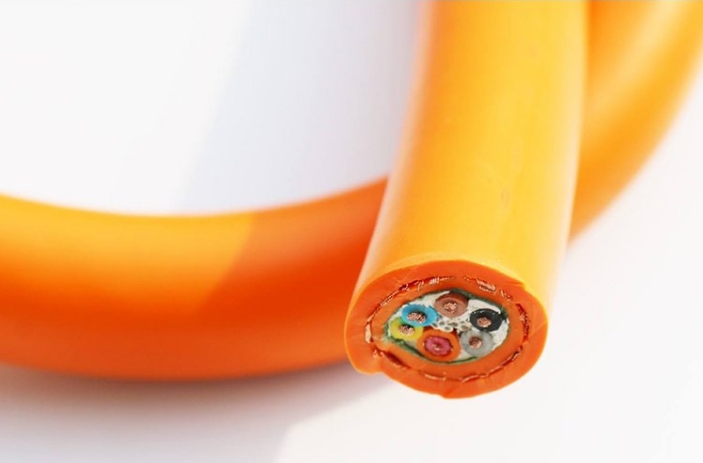
Silicone rubber motor leads and silicone rubber cables are suitable for fixed installation or connection cables of mobile equipment in power transmission lines with an AC rated voltage of 0.6/1KV and below. This product features heat radiation resistance, cold resistance, acid and alkali resistance, resistance to corrosive gases, and water resistance. The cable structure is flexible, convenient for radiation protection, stable electrical performance in high-temperature (cold) environments, outstanding anti-aging performance, and a long service life. It is widely applied in industries such as metallurgy, power, petrochemicals, electronics, and automobile manufacturing.
Silicone rubber motor leads, also known as motor leads or single-phase motor leads. The conductors are twisted together with soft copper wires or tin-plated with soft copper wires. The sheath is insulated with rubber. Our factory usually uses silicone rubber to enhance the mechanical external force of the cable, increase its flexibility and wear resistance, and extend its service life. Mobile working conditions :-25℃ to +80℃. Fixed working conditions: -40℃ to +80℃. It is used for directly connecting the motor winding to lead out the casing or connecting the winding to the connection column on the motor casing.
- Tel:180-5860-1913
- Address: No. 634, Liufeng Road, Guolin Town, Yixing City, Jiangsu Province, China

Business contact
Wechat scan code